Beijing is one of the oldest cities in the world. It’s also one of the largest.
Beyond the surface level, it’s still very different to western cities in a number of ways. Those differences can easily trip up new visitors.
I’ve lived and worked in China, and I’ve traveled around Beijing numerous times. So, let me help you ensure your vacation is more fun and exploration than trouble and confusion.
Here are my best Beijing travel tips!
1. Check you’re eligible for visa-free travel

You probably don’t need to apply for a formal tourist visa. Image by i viewfinder on Shutterstock.
Most travelers don’t need a visa for China these days. Yay!
You could be entitled to visa-free travel or visa-free transit.
The difference? The first is for trips up to one month, while the second is for stopovers of up to six days.
Check if you’re eligible for either one here.
If you’re ineligible, there’s always the trusty L (tourist) visa which you need to apply for at your local Chinese embassy.
2. Work out how you want to pay

Even markets prefer digital payments. Image by Freer on Shutterstock.
Like elsewhere in China, the locals in Beijing love their technology and this impacts how they pay for things.
Most of the time, you’ll see them paying using their phone. Even small food stands prefer phone payments.
If you want to join in, you can set up Alipay or WeChat Pay on your phone and link your bank card. You’ll just need to provide some personal details including your passport details.


If you’re not comfortable handing over your details, you’ll need to use cash. Try to get low-denomination notes, as smaller stores often don’t have change for big notes.
The ATMs in Beijing only dispense 100 yuan notes.
Oh, and credit cards are hardly ever used in China, so while it’s good to have different payment methods as back-up, you probably won’t use your plastic cards (apart from at the hotel).
I highly recommend using Alipay or WeChat Pay as it makes things so much easier. You’ll just need an eSIM to use them (see my tip no. 12 below).
Remember: Set up your payment apps before you leave home, in case there are any issues.
3. Don’t drink the tap water

Only drink bottled water in Beijing. Image supplied by Mike Cairnduff.
Whatever you do, don’t drink the tap water in Beijing.
Not even the locals drink the water in China, so it’s even worse for travelers who aren’t used to the local microbiome.
Get used to drinking bottled water when you’re in Beijing. You’ll find it sold everywhere.
Oh, and if you happen to get a bit of water in your mouth after brushing your teeth or showering, it’s OK – just spit it out.
That’s what I do and I’ve always left Beijing with a trouble-free tummy.
4. Prepare for the language barrier

Having bi-lingual directions can help. Image supplied by Mike Cairnduff.
You will find some people who speak English in the city center, but probably not as many as you might think.
Only a small percentage of the local people speak English (or are willing to speak it). It’s usually the younger demographic, so there’s a lot of people who won’t be able to understand you at all.
Chinese people tend to be a little shy about their English-speaking abilities.
If they think that they might make a mistake, they’ll often pretend they can’t speak or understand English at all.


This may leave you struggling to get around, especially if you’re traveling solo or you’re not part of a tour group.
But it actually isn’t as hard as you think to travel in a place where you don’t speak the language. Here are some ideas to help:
- Have your accommodation name and address in Chinese characters on your phone, or carry around your hotel’s business card
- Download a translation app that works in China and can be used offline
- Learn some basic words or even the numbers which will help you in stores
- Screenshot key phrases and keep them on your phone to show to people
Also, be prepared to use lots of body language and to look ridiculous when you do it!
5. Always carry your passport

Your most important possession in China! Image by Pexels.
This is one of the most important Beijing travel tips.
Technically, you’re meant to carry your passport on you in case the police ask you.
But in a practical sense it’s because you need to show it to get in to virtually any tourist attraction, as well as board the high-speed trains.
A copy on your phone won’t be accepted, as the Chinese are so strict about security.
6. Visit the big attractions, and the smaller ones

The sacred Temple of Heaven. Image supplied by Mike Cairnduff.
There are sooo many things to see and do in Beijing.
The biggest attractions that people tend to head for, and which I also recommend, are:
- The Great Wall of China
- Forbidden City
- Tiananmen Square
- Hutongs (back alleys)
- Temple of Heaven
- Summer Palace.
While I recommend visiting all these attractions (especially The Great Wall – it’s the best place by far), consider doing other things too, if you have the time.
For example, you could visit the quirky 798 Art District, sift through antiques at Panjiayuan Market, or try the silk market.
You could take a day trip to a nearby city like Tianjin. It’s just an hour away on the bullet train.
There’s also Universal Beijing Resort which is fairly new. While it’s obviously very touristy, and quite expensive by local standards, it’s a super-fun day out for the family.
You can read more about the attractions in my Beijing travel guide.
7. Forget personal space

Wangfujing is always busy. Image supplied by Mike Cairnduff.
The idea of personal space doesn’t really exist in Beijing (or in China as a whole, for that matter).
Beijing is a huge, busy city and everywhere is crowded. During your time there, you will get pushed, stepped on, bumped into, and cut off when walking.
And the locals won’t say “excuse me” when they do it. In fact, they probably won’t even notice they’ve done it at all.
Whatever you do, don’t get angry about this. It’s not personal and really is just part of the Chinese culture.
And if you stay for long, you’ll probably pick up this behavior as well, it’s just so accepted in China.
In fact, this was part of my own reverse culture shock. When I got home from a recent trip to Beijing, I walked towards an escalator and deliberately cut off someone else who was ahead of me.
He stared at me like I was the rudest person in the world, and I got a huge shock when I realized that my behavior had changed in such a short time.
I literally had to relearn my own country’s acceptable behaviors!
8. Bring an adapter

Bring one of these so you can stay connected. Image by Paralaxis on Shutterstock.
Beijing uses lots of different kinds of power plugs.
Depending on where you stay, you’ll find A, C, and I plug sockets, so if you want to charge your electronics, then make sure you have adapters to match.
You may also need a voltage converter (e.g. if you’re from the US) to keep your electronics safe, so make sure you buy an all-in-one adapter/converter.
9. Prepare yourself for the toilets

Brace yourself for a local squat toilet! Image supplied by Gayle Aggiss.
You’ve probably heard over and over that Beijing is a big, modern city. And it is.
But this doesn’t mean that it’s western and this applies particularly to the toilets.
Yes, you will come across a lot of squat toilets in Beijing. And yes, you will probably have to use them.
I wish I could tell you that the squat toilets aren’t as bad as some people say, but they are a constant challenge.
My advice is to always have toilet paper with you as the toilets usually won’t have any.
You should also carry a bottle of sanitizer with you wherever you go, as most public bathrooms in Beijing don’t have soap.
Also, remember that China’s sewerage system isn’t set up to handle toilet paper, so you usually can’t flush it down the toilet. Put it in the bin instead and then wash your hands really well because the bins are often overflowing.
Expat Gayle has written a whole article on Chinese toilets if you want to find out more.
10. Just accept the noises

Beijingers love slurping their soup. Image by Gowithstock on Shutterstock.
Chinese culture is very different to western cultures and nowhere is this more obvious than in restaurants or in the streets.
The first time I sat down in a restaurant and heard the slurping I was appalled. But I got used to it over time, even if I couldn’t do it myself.
Slurping isn’t considered rude in China, which kind of makes sense considering it’s natural to slurp when you drink soup.
Seeing and hearing Chinese spitting is a little harder to accept. Dodging a motorcycle rider who pulls over to spit near your feet in the gutter is confronting, as is dodging the puddles on the sidewalk.
But you do get used to it if you’re there long enough. It’s just part of local life.
11. Monitor the air quality

Gray skies over the Palace Museum. Image supplied by Mike Cairnduff.
In recent years, the air pollution in Beijing has really improved.
Essentially, factories and industry have moved further away, and there has been government intervention too.
You can still get the odd bad day though, particularly in the winter months or when there’s the occasional dust storm.
There’s nothing you can do to change the city’s air pollution.
All you can do is be prepared for it. Here’s how:
- If you have respiratory issues, avoid the city in winter when the air quality is the worst
- Wear a proper mask
- Look out for official air warnings on the really bad days and visit indoor sites on those days
- Avoid strenuous activities like hikes on bad air days.
I recommend this website to track the air quality in Beijing.
12. Get an eSIM and VPN

Stay connected in China with a VPN. Image by Tracy Le Blanc on Pexels.
Out of all the Beijing travel tips I could give you, this one is the most important for anyone who wants to access blocked foreign internet sites and apps, or make digital payments in China using WeChat or Alipay.
You’ve got two options, and I always do both:
- Get an eSIM (it needs to be able to unblock foreign sites)
- Get a standalone VPN for secure use in your hotel room via Wi-Fi
See this page for the standalone VPN I personally recommend for Beijing.
Or at a minimum, get the VPN-enabled eSIM which I recommended here:
Remember: Download your VPN, and install your eSIM, before you arrive in China.
13. Don’t tip

Tipping isn’t part of Chinese culture. Image by Saelanlerez on Shutterstock.
Tipping is unnecessary in Beijing and if you try to tip, it will confuse people.
The only time you should tip is when it’s requested, e.g. if you take a private tour, then your tour company may suggest you leave a tip.
Otherwise, I wouldn’t worry about it.
14. Book your palace tickets early

Me inside the Palace Museum. Image supplied by Mike Cairnduff.
You need to book your ticket to the Forbidden City – also known as the Imperial Palace or Palace Museum – about a week before you visit. It always sells out early.
The only legitimate way to book is via the Palace’s official website here.
You can choose either the morning or afternoon session. It’s closed every Monday.
15. Be patient with transport

Packed trains in peak hour. Image supplied by Mike Cairnduff.
Between the language barrier, the crowds, and the sheer size of Beijing’s public transportation network, it can be challenging, particularly if you’re visiting for the first time.
Beijing has hundreds of subway stations. So, have a navigation app ready on your phone so you know where you’re going once you hop off.
You’re probably familiar with Google Maps but there are other China map apps too.
To be frank, if you want to see a lot in a short time, then it might be better to book a tour via Trip, especially if you’re visiting The Great Wall of China which is quite far out of the city.
This can save you time and isn’t as expensive as you might think.
But even if you’re in a car or coach, Beijing’s rush hour is legendary and can turn a short trip into an hours-long expedition. It depends where you’re going!
16. Plan your trip to the Great Wall

Some parts of the wall are less touristy and great for hiking. Image supplied by Mike Cairnduff.
I’ve mentioned the Great Wall of China a few times now, but this really needs to be a Beijing travel tip all on its own.
After all, the Great Wall is supremely iconic and what Beijing is best known for.
This awe-inspiring construction dates back centuries, and it meanders through numerous provinces over thousands of miles. It’s not just located near Beijing.
However, the best preserved parts are closest to Beijing, which is why everyone heads there.
Here are the most popular parts of the Great Wall of China:
- Mutianyu – the best restored, and you can even toboggan down (1.5 hours’ drive)
- Badaling – most popular with Chinese tourists and the busiest (1.5 hours’ drive)
- Jinshanling – the most beautiful and wild, great for hiking (2-3 hours’ drive)
- Simitai – also good for hiking, and offers night tours (2-3 hours’ drive).
It’s important to plan your trip to the wall carefully, as each section is different and caters to different kinds of tourists.
And, they’re all different distances from Beijing, though a one-day return trip is enough time for most sections.
I’ve got a dedicated page on The Great Wall of China which goes into more detail about the different sections.
17. Beware of scammers

Scammers are known to be in this area of the city. Image supplied by Mike Cairnduff.
If you’re a first-time traveler in China, you really need to hear this.
If anyone approaches you, especially near Tiananmen Square or the Forbidden City, and asks you to come with them to try some tea, definitely say “no”.
It’s a well-known scam, where after sampling a few small cups of tea, you’re essentially locked in their teahouse until you pay the exorbitant amount they demand.
You may also be approached by people offering to be your tour guide, especially in the Forbidden City area. Be very, very careful.
18. Come in spring or fall

Weather conditions can vary greatly in Beijing. Image supplied by Mike Cairnduff.
So, when is the best time to come to Beijing?
If you don’t like extreme hot and cold temperatures, then spring and fall are the most pleasant seasons to visit.
Just note that this is when most travelers like to visit the city too.
No matter what season you come, it’s a good idea to avoid Chinese New Year and the other Chinese public holidays because everywhere will be unbelievably crowded.
Flights and hotels will also be more expensive.
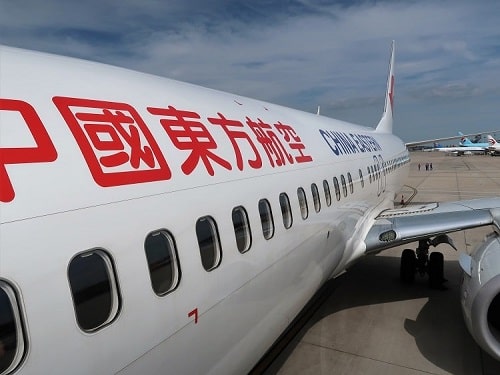
(Oh, speaking of flights, unless you’re on a shoestring budget then stay away from Beijing Capital Airlines.)
19. Avoid the Ming Tombs

It’s pretty, but this is kind of it. Image supplied by Mike Cairnduff.
A lot of tour groups stop in at the Ming Tombs on the way to the Great Wall.
Understandable – it’s a UNESCO World Heritage Site.
Honestly though, there’s not a whole lot to see here. There are no visible tombs.
I’d head straight for the Wall instead and spend more time there.
20. Skip the Bird’s Nest

A stadium is a stadium, yeah? Image by lionelccs on Pixabay.
Similar to the one above, I wouldn’t bother with the Bird’s Nest.
Although the city is famous for hosting both the summer and winters Olympics, the National Stadium (known as the Bird’s Nest) is just a big concrete stadium.
I don’t recommend checking it out as there’s not much to do there.
Granted, the Chinese are proud of it and the design is unique.
My final Beijing travel tip
Living in China, I found that things that seemed strange at first came to feel natural and even appropriate over time.
Travel demands a flexible mind. So, if you visit Beijing with a flexible mind, I can guarantee you’ll have a much better trip.
Have a great time. And don’t forget to get your eSIM!
I hope you liked my Beijing travel tips. Now, check out my ultimate China travel tips page for even more helpful advice about The Middle Kingdom.
Main image credit: Supplied by Mike Cairnduff.
FAQ about Beijing travel
Is it safe to travel to Beijing?
Yes, Beijing is safe for foreign tourists. Crime against foreigners is practically unheard of. But if you’re prone to respiratory problems, air pollution and dust storms may affect you badly.
Is Beijing worth visiting?
Absolutely! It’s the cultural capital of China and it’s very different to other Chinese cities. There’s unique food, a local dialect, and countless historical sites. You could spend weeks in Beijing and still not experience everything.
Why is Beijing a good place to visit?
It’s full of history and culture, making it an absolute treat for tourists. There’s the world-famous Great Wall of China within a few hours’ reach, Forbidden City (Palace Museum), Temple of Heaven, ancient hutongs (back alleys), Summer Palace, Tiananmen Square, and much more.
Is Beijing expensive to visit?
Attractions and food are generally affordable and public transport is cheap. However, if you eat at fancy restaurants and take private tours, costs can add up quickly.